Friction Ring Ball Lock: Reliable and Secure Shaft Locking Solution for Industrial Applications
What is a Friction Ring Ball Lock?
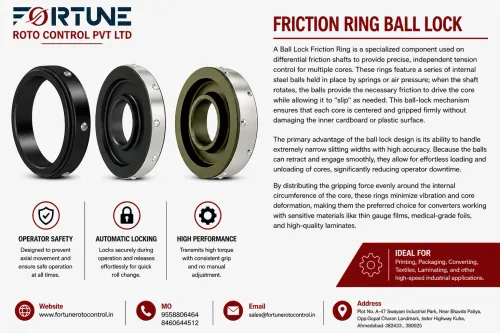
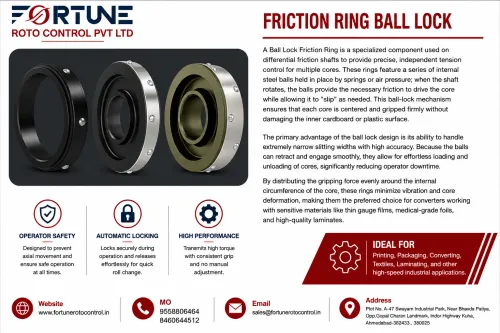
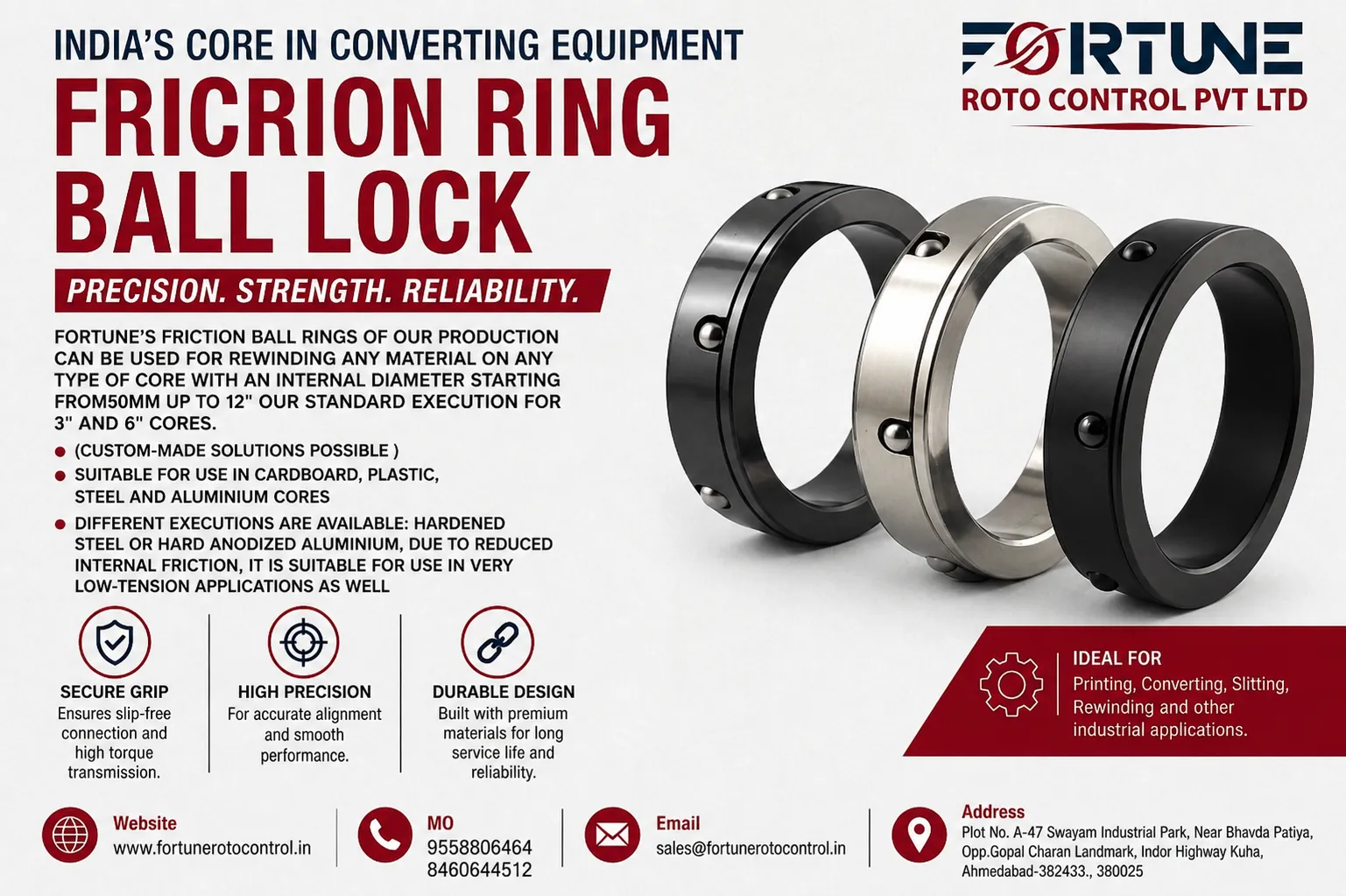
A Friction Ring Ball Lock is a precision-engineered mechanical locking device used to securely position and retain components on a shaft without the need for complex fastening systems. It utilizes hardened steel balls and a friction ring mechanism to provide a strong, reliable grip while allowing quick installation and removal.
Friction Ring Ball Locks are widely used in winding, unwinding, converting, printing, packaging, and other industrial machinery where secure shaft locking and precise positioning are essential.
How Does a Friction Ring Ball Lock Work?
The locking mechanism consists of hardened steel balls held in place by a precision friction ring. When installed onto the shaft, the balls engage securely with the mating surface, preventing unwanted axial movement while allowing smooth operation.
The design enables quick assembly and disassembly without damaging the shaft, making maintenance and component replacement fast and efficient.
Key Features
- Precision-engineered locking mechanism
- High-strength hardened steel balls
- Secure shaft retention with excellent holding force
- Quick installation and easy removal
- Compact and lightweight design
- Corrosion-resistant construction
- Low maintenance and long service life
- Suitable for high-speed industrial applications
Applications
Friction Ring Ball Locks are commonly used in:
- Air shafts and mechanical shafts
- Slitting and rewinding machines
- Paper converting equipment
- Flexible packaging machinery
- Printing presses
- Textile machinery
- Plastic film processing
- Laminating machines
- Roll handling systems
- General industrial automation
Benefits of Using a Friction Ring Ball Lock
Secure Shaft Locking
The ball locking mechanism provides a firm and reliable grip, ensuring stable component positioning even under continuous operation.
Fast Installation
Designed for quick assembly and removal, Friction Ring Ball Locks reduce maintenance time and improve machine productivity.
High Durability
Manufactured from premium-quality materials with hardened steel components, these locks are built to withstand heavy industrial use.
Reduced Maintenance
The simple yet robust design minimizes wear and requires very little maintenance, resulting in lower operating costs.
Improved Machine Performance
Reliable locking enhances operational stability, reduces vibration, and supports smooth machine performance during high-speed production.
Why Choose Fortune Roto Control?
At Fortune Roto Control, we manufacture high-quality Friction Ring Ball Locks designed to deliver exceptional performance, durability, and precision. Every product is manufactured using advanced machining technology and premium-grade materials to ensure reliable operation in demanding industrial environments.
We also offer customized solutions based on:
- Shaft diameter
- Ball size
- Ring dimensions
- Machine specifications
- Application requirements
- Special design requirements
Our commitment to quality ensures that every Friction Ring Ball Lock provides dependable performance and long service life.
Maintenance Tips
To maximize the lifespan of your Friction Ring Ball Lock:
- Keep the locking mechanism clean and free from dust.
- Inspect steel balls regularly for wear or damage.
- Ensure proper installation on the shaft.
- Lubricate moving parts only if recommended for your application.
- Replace worn components promptly to maintain secure locking performance.
Conclusion
A Friction Ring Ball Lock is an essential component for industries requiring secure shaft retention, quick assembly, and dependable performance. Its compact design, high holding strength, and long service life make it an ideal choice for roll handling equipment, air shafts, and a wide range of converting and packaging machinery.
Whether you need a standard size or a custom-designed solution, Fortune Roto Control manufactures precision-engineered Friction Ring Ball Locks that deliver reliable performance, improved productivity, and long-term value for industrial applications.
Keywords