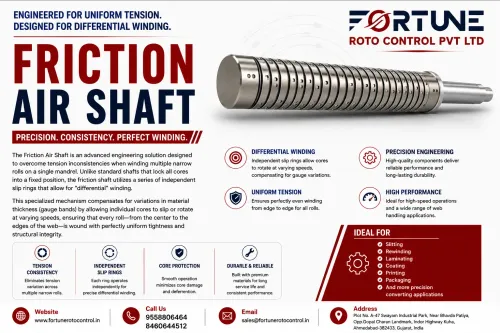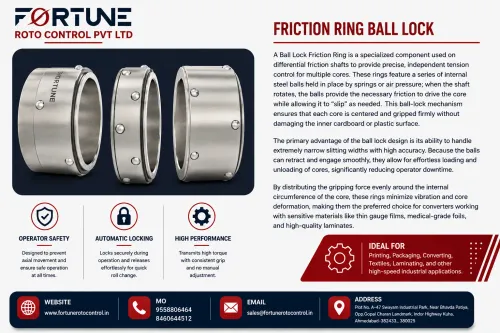
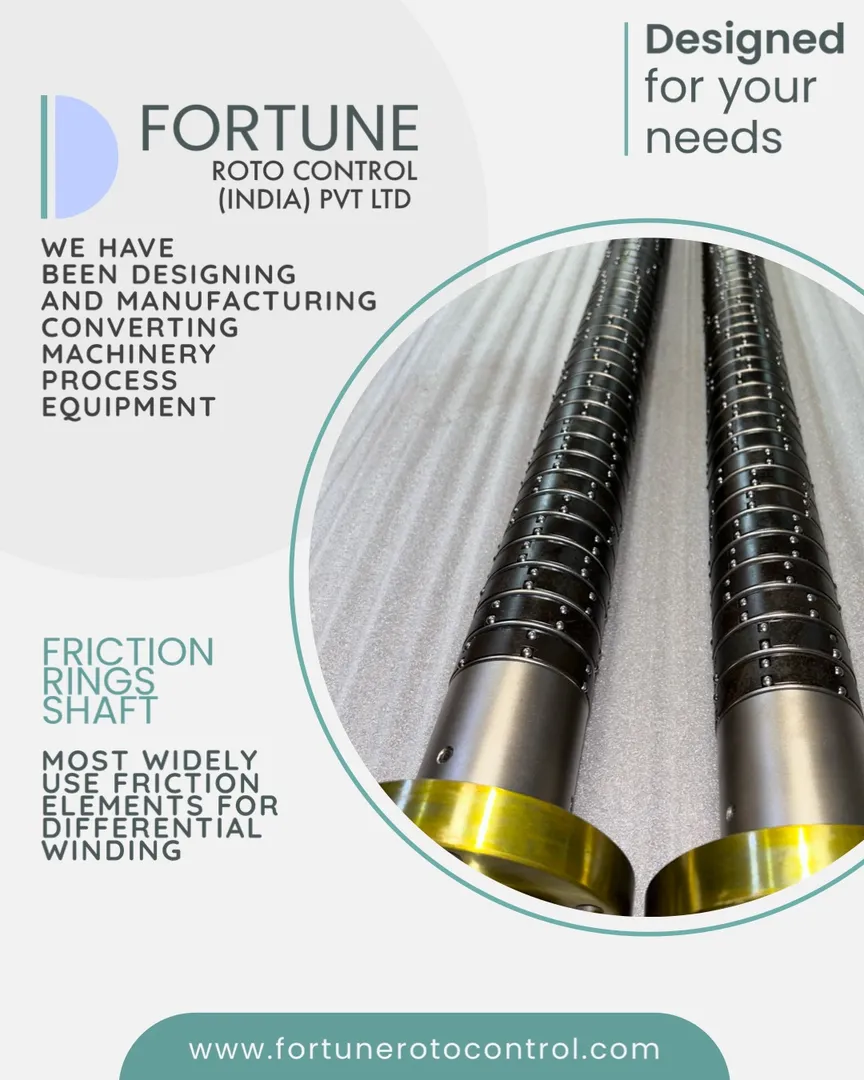
A Friction Ring Shaft is a highly specialized winding component designed to allow multiple material rolls of varying widths or tensions to be wound simultaneously on a single spindle. By employing a Friction Ring Shaft, manufacturers can compensate for minor variations in material thickness (gauge) by allowing individual rings to slip at a controlled rate, ensuring every roll is wound with perfect tension. The precision engineering of the Friction Ring Shaft makes it the industry standard for slitting and rewinding operations where high-quality, uniform output is required for every roll. Key Features & Benefits Differential Tension Control: Allows individual friction rings to rotate at slightly different speeds, preventing 'slack' or 'over-tightened' rolls when winding multiple webs simultaneously. Precision Ball-Locking Mechanism: Most rings feature internal balls that provide a secure grip on the core, ensuring it stays centered and stable throughout the entire winding process. Non-Marring Performance: Designed to grip the inside of cores without causing damage, which is essential for maintaining core reusability and high-speed stability. Rapid Core Loading: The intuitive design allows operators to slide cores onto the Friction Ring Shaft quickly, significantly reducing changeover times between production runs. Durable & Low Maintenance: Built with hardened surfaces and high-grade internal components, these shafts are designed to withstand the heat and friction of continuous industrial use without losing calibration.
Keywords