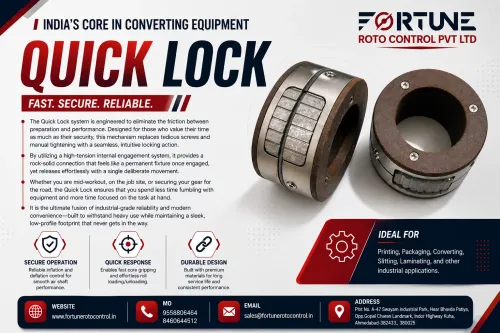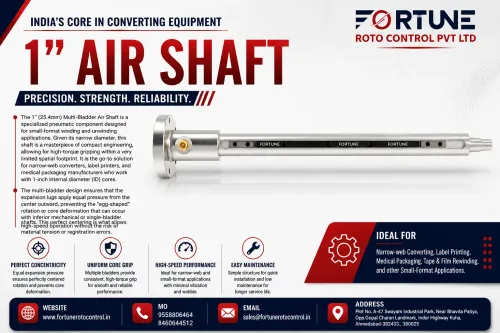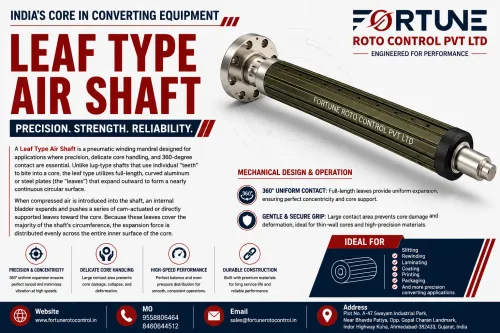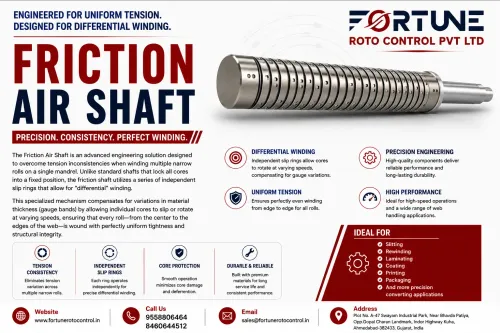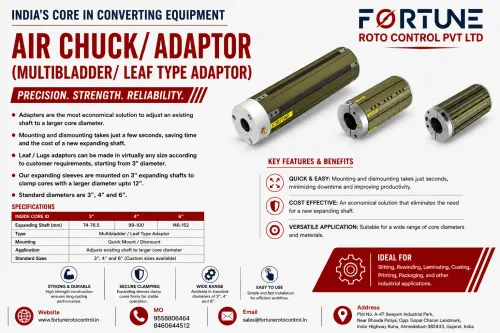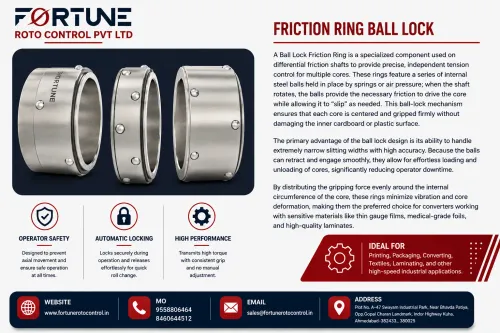
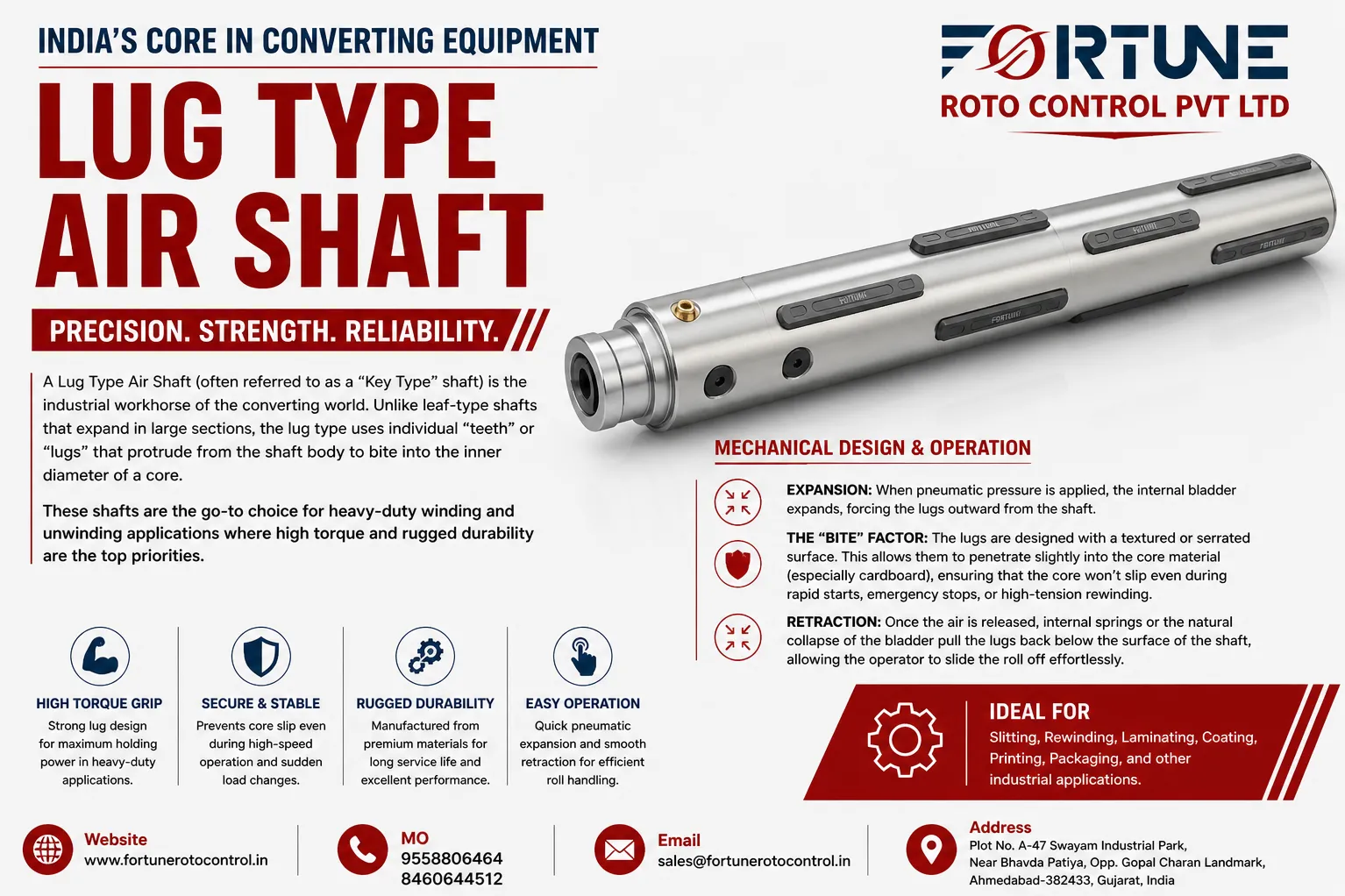
A lug type air shaft (also known as a button shaft or pin type air shaft) is one of the most common and robust core-holding devices used in the web converting and printing industries. It is designed to secure cores during the winding and unwinding of materials like paper, plastic film, and heavy foils. Unlike leaf type shafts that expand along their entire length, a lug type shaft features rows of individual, protruding gripping elements—called lugs or buttons—spaced symmetrically across the surface of the shaft body.
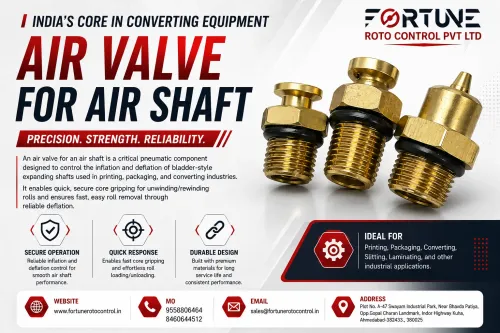
The internal mechanism relies on a centralized, heavy-duty pneumatic bladder positioned within a rigid steel or aluminum body. When compressed air is introduced through an air valve at the end of the shaft, the central bladder expands, pushing a series of internal pistons or mechanical ramps outward. This action forces the individual lugs to extend past the outer diameter of the shaft and bite firmly into the inner wall of the material core. When air is exhausted, internal springs retract the lugs flush with the shaft surface, allowing the operator to slide the finished roll off effortlessly.
Lug type air shafts are highly valued for their exceptional torque transmission and heavy load-carrying capacity. Because the lugs are concentrated at specific points, they exert concentrated grip force, making them ideal for handling heavy-duty cardboard, steel, or plastic cores where roll slippage cannot be tolerated. They excel in applications involving high-speed slitting, heavy unwinding, or rapid acceleration and deceleration cycles. Furthermore, their design makes them incredibly durable and cost-effective, as individual lugs can be easily replaced if they become worn over time, ensuring a long operational lifespan in demanding factory environments.
The internal mechanism relies on a centralized, heavy-duty pneumatic bladder positioned within a rigid steel or aluminum body. When compressed air is introduced through an air valve at the end of the shaft, the central bladder expands, pushing a series of internal pistons or mechanical ramps outward. This action forces the individual lugs to extend past the outer diameter of the shaft and bite firmly into the inner wall of the material core. When air is exhausted, internal springs retract the lugs flush with the shaft surface, allowing the operator to slide the finished roll off effortlessly.
Lug type air shafts are highly valued for their exceptional torque transmission and heavy load-carrying capacity. Because the lugs are concentrated at specific points, they exert concentrated grip force, making them ideal for handling heavy-duty cardboard, steel, or plastic cores where roll slippage cannot be tolerated. They excel in applications involving high-speed slitting, heavy unwinding, or rapid acceleration and deceleration cycles. Furthermore, their design makes them incredibly durable and cost-effective, as individual lugs can be easily replaced if they become worn over time, ensuring a long operational lifespan in demanding factory environments.
Keywords